Skip to content
Back to the blog

06 — Sales

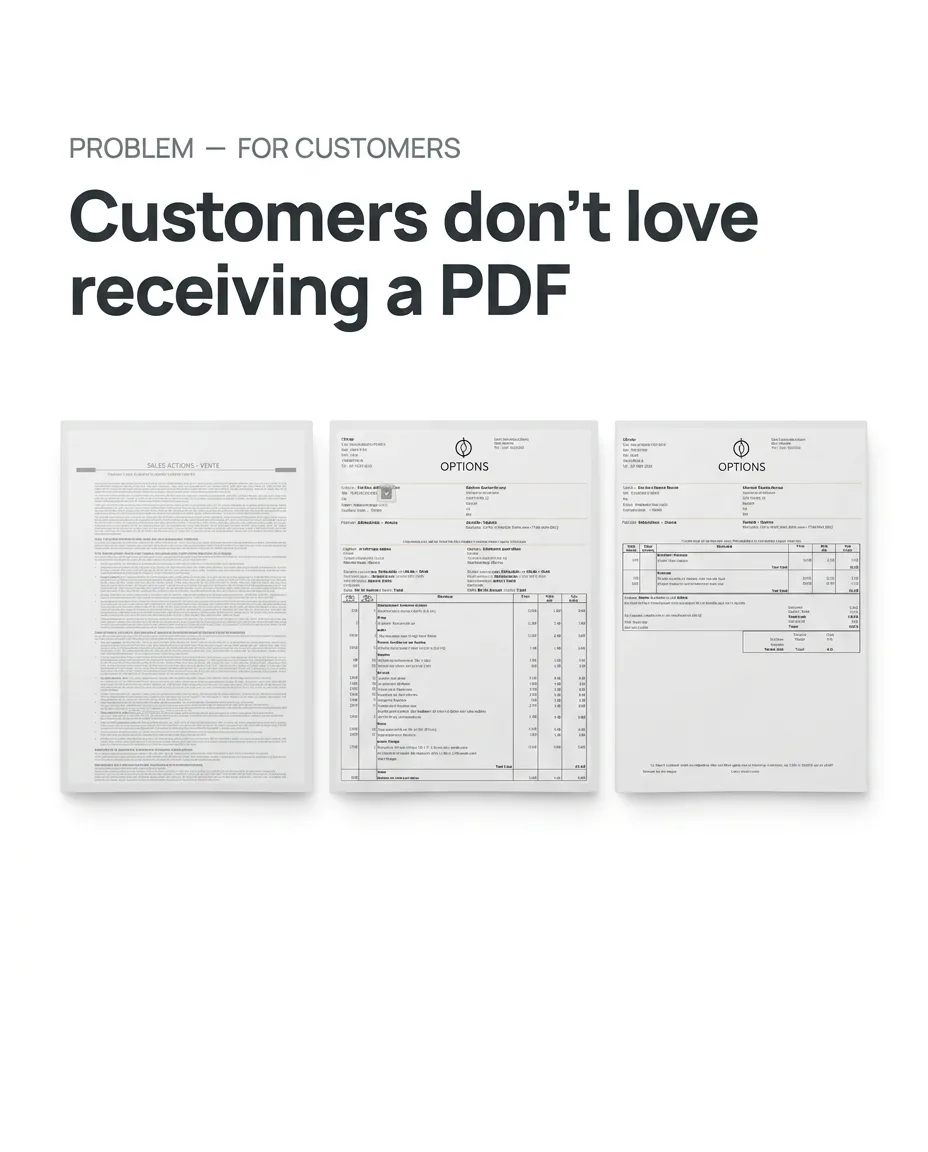
Your proposal is the last impression. It cannot look like a 2005 invoice.

Most B2B deals don't die over price. They die because the proposal — the last thing the client sees before deciding — looks like a static PDF from 2005. Here's how to fix the moment that matters most.

By Aymeric de Guerre, Co-founder, Duodeal

You wouldn't show up to a fifty-thousand-euro meeting in sweatpants. So why does the document that decides those meetings still look like an invoice?

I've been in sales most of my professional life. Before Duodeal, I co-founded Atawa, a B2B event rental company we bootstrapped from zero to twelve million in annual revenue. We sent thousands of proposals. And the part that broke us, over and over again, was this: you spend weeks building trust with a client — discovery calls, demos, decks, pricing conversations, a careful relationship — and then you compress all of it into a PDF attachment. Same structure as the last quote. Same wall of text. Same font. The only thing that changes is the invoice number.

“Then you send it. And it disappears into an inbox.”

Think about every step of a B2B sale. Your website draws them in. Your LinkedIn presence builds credibility. A cold email lands a discovery call. The call earns a demo, the demo earns a deck, the deck earns a pricing conversation. And all of it — every hour of work, every careful touchpoint — flows toward one final document. That document is the last thing your client sees before they decide. And in most companies, it's the least branded, least considered, least intentional thing they send.

Placeholder image — to be replaced with the lead visual for the article
Placeholder image — to be replaced with a side-by-side or screenshot illustrating the PDF-vs-page contrast

Why this keeps happening

I don't blame sales teams for this. Every salesperson I've worked with would love to send something better. The problem is structural. Proposal tools have been stuck for a decade. Most of them are document generators dressed up in new colours — they help you produce a PDF faster, but they don't change the fundamental thing the buyer experiences. A faster PDF is still a PDF. Meanwhile, every other channel in the buyer's life has moved on — they book holidays in interactive experiences, make financial decisions inside dashboards, watch product demos in branded videos. Then, when they're about to spend real money on you, you send them a document that looks like it came out of a 2005 print queue.

“The proposal should be the best thing the client sees, not the most disposable.”

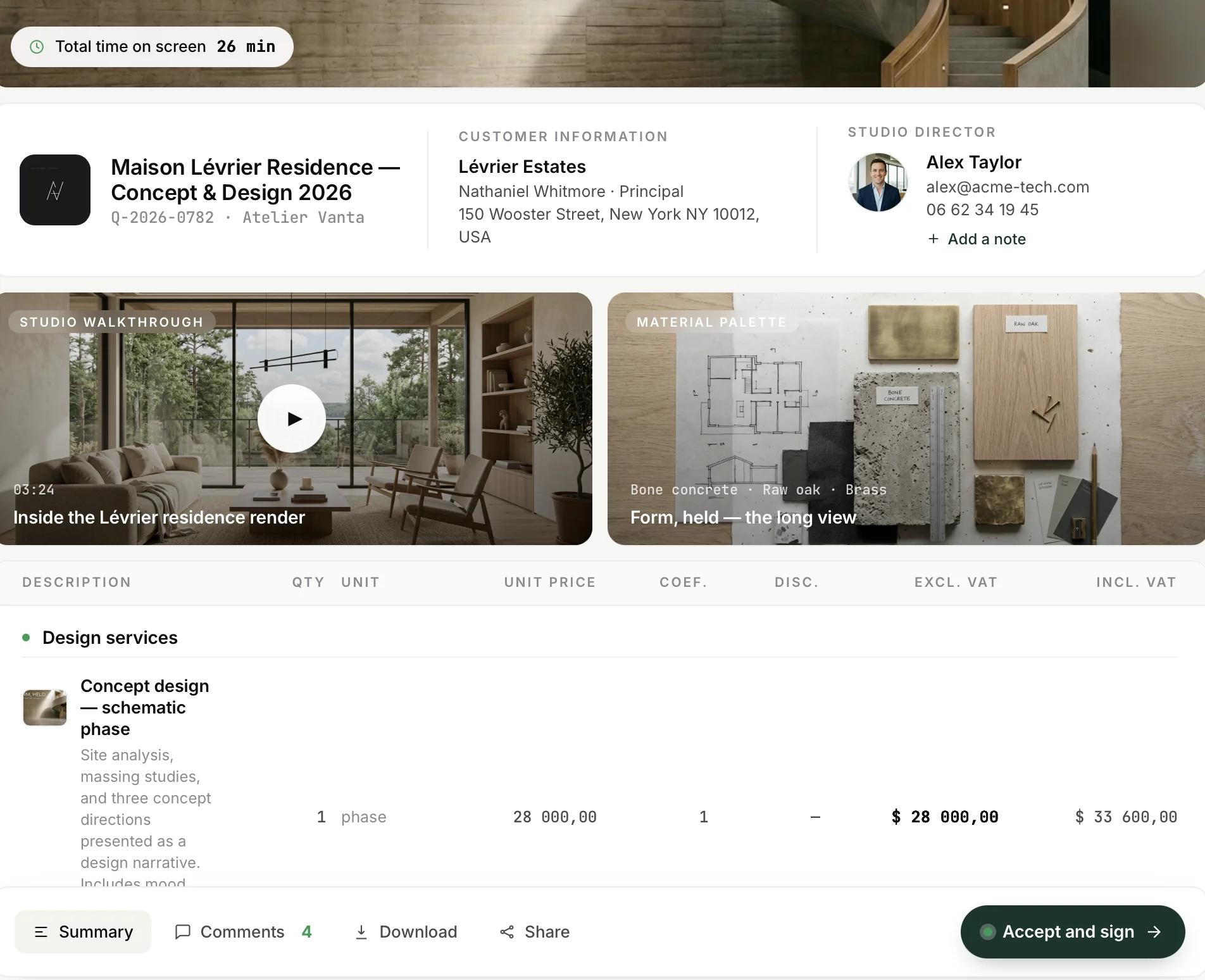
When I started building Duodeal, we kept coming back to that one principle. So we built it as a branded online space — not a document. A page the client opens in their browser, designed around their decision. A cover that knows who they are. A welcome video from the salesperson they've been talking to. The presentation that earned the meeting, embedded right inside. Pricing they can explore. Answers to questions before they have to ask. A place to comment, to sign, to say yes — all in one beautifully designed, on-brand experience. It's not a faster document. It's a different kind of object.

The real question

Open the last proposal you sent. Look at it the way a client would. Ask yourself whether it earns the deal — or whether it's the weakest link in everything that came before it.

Aymeric de Guerre is the co-founder of Duodeal and a serial entrepreneur.